This comprehensive guide on how to select gaming monitor cuts through the noise for busy US gamers balancing life and play. Learn the essential factors like refresh rates response times panel types and resolutions without the tech jargon. Discover how to upgrade your setup on a budget ensuring peak performance for your favorite titles from competitive esports to relaxing social games. We tackle common issues such as choosing between curved and flat screens understanding HDR and variable refresh rates like G-Sync and FreeSync. Whether you are a casual player enjoying cozy games or a dedicated enthusiast optimizing for skill building this guide provides practical solutions to elevate your gaming experience. Avoid setup headaches and performance problems by making an informed choice that delivers real value for money. Stay current with 2026 trends in display technology ensuring your next monitor purchase is future proof and enhances your social gaming sessions. This resource is designed for gamers who prioritize fun performance and smart spending.
Related games- Guide to R6 Roblox What it is and Why it Matters
- Guide to OperativeComms Roblox for Busy Gamers
- Guide How to Master Glass Roblox Game 2026 Tips
- Guide to Roblox Exploiting Scripts What Gamers Need To Know
- Guide How To Turn Roblox Mic On Step By Step
What is the most important spec when I select a gaming monitor?
For most gamers, especially those balancing work and play, the refresh rate combined with a low response time is crucial. A 144Hz refresh rate with a 1ms response time offers a smooth, responsive experience without breaking the bank, perfect for both competitive matches and immersive story-driven games. This balances performance with value, a key consideration for many adult gamers who want an upgrade that truly matters without unnecessary hype.
Do I really need a 4K gaming monitor?
Not necessarily. While 4K offers stunning visual clarity, it demands a powerful graphics card and is often overkill for fast-paced competitive gaming where higher frame rates and lower response times are prioritized. For the average gamer, 1440p (QHD) or even 1080p (FHD) at a high refresh rate provides an excellent balance of visual quality and performance, making it a more practical and budget-friendly choice. Many gamers find 1440p the sweet spot for modern titles.
What's the difference between IPS VA and TN panels for gaming?
TN panels offer the fastest response times but have poorer color reproduction and viewing angles, best for hardcore esports. IPS panels provide superior colors and viewing angles, great for immersive games, but traditionally slower response times, though modern IPS monitors are catching up. VA panels offer excellent contrast and deep blacks, ideal for cinematic experiences, but can suffer from ghosting in fast-moving scenes. Choose based on your primary gaming style: speed, visuals, or immersion.
Is a curved gaming monitor worth it?
A curved gaming monitor can enhance immersion, particularly with larger screen sizes, by wrapping the image around your peripheral vision. This can be great for single-player adventure games or flight simulators. However, for competitive shooters or productivity tasks, a flat screen might be preferred due to less distortion. It's largely a personal preference, but many gamers find the gentle curve adds to the overall experience without negatively impacting gameplay.
How important is HDR for gaming monitors?
HDR (High Dynamic Range) significantly improves contrast and color vibrancy, making games look more lifelike and visually stunning, especially in titles designed to leverage it. While not strictly essential, a good HDR implementation can dramatically elevate the visual experience for those who appreciate graphical fidelity in their gaming. Look for VESA DisplayHDR certifications (e.g., HDR400, HDR600) for a reliable HDR experience, as not all HDR is created equal.
Should I prioritize G-Sync or FreeSync in a gaming monitor?
Both G-Sync (NVIDIA) and FreeSync (AMD) are variable refresh rate (VRR) technologies that synchronize your monitor's refresh rate with your GPU's frame rate, eliminating screen tearing and stuttering. If you have an NVIDIA GPU, G-Sync Compatible or native G-Sync monitors are ideal. For AMD GPUs, FreeSync monitors are the go-to. Both technologies have matured, with many FreeSync monitors now working effectively with NVIDIA cards via 'G-Sync Compatible' modes, offering more flexibility and often better value.
What size gaming monitor is best for balancing gaming and work?
For a balanced setup, a 27-inch to 32-inch monitor is often ideal. A 27-inch 1440p monitor provides ample screen real estate for multitasking during work hours and a sharp, immersive experience for gaming without being too overwhelming. For those who enjoy larger displays, a 32-inch monitor offers even more room, though ensure your desk space can accommodate it comfortably. It's about finding that sweet spot between productivity and gaming enjoyment.
Choosing the perfect gaming monitor can feel like navigating a boss fight without a map. With so many technical specs and marketing buzzwords, it’s easy to get lost, especially when you’re balancing a job, family, and a life outside of your digital adventures. You want an upgrade that genuinely enhances your relaxation time, sharpens your skills, and lets you enjoy those social gaming sessions without breaking the bank or requiring a week-long setup marathon. This isn't just about raw power; it's about smart choices that deliver real value and optimize your fun.
You’re not alone in wanting a monitor that delivers performance without unnecessary hype. Around 87% of US gamers play regularly, often dedicating 10+ hours a week, and for many, gaming is a vital stress reliever and a way to connect with friends. Whether you’re diving into a new cozy game, strategizing in esports, or exploring a vast open world with buddies on Discord, your monitor is your window to that experience. This guide on how to select gaming monitor is built for you: the adult gamer who wants practical solutions, budget-friendly options, and insights into what truly matters in 2026's tech landscape. Let's cut through the jargon and find the display that truly elevates your play.
How Do I Choose the Right Gaming Monitor for My Budget?
Selecting a gaming monitor starts with your budget, as this will narrow down your options considerably. For many gamers, finding that sweet spot between performance and affordability is crucial. Instead of chasing the absolute bleeding edge, consider what truly impacts your gaming experience.
For example, you might think a 4K, 240Hz monitor is a must, but if your graphics card can't consistently push those frames, you're paying for unused potential. Focus on a monitor that synergizes with your existing hardware. A solid budget for a strong gaming monitor in 2026 often falls between 250 and 500 dollars, offering excellent 1440p resolutions, high refresh rates (144Hz-165Hz), and fast response times.
- Entry-Level (Under $250): Expect 1080p resolution, 144Hz refresh rate, 1ms response time, often with a TN or basic IPS panel. Great for esports on a budget.
- Mid-Range ($250-$500): The sweet spot for many. You’ll find 1440p resolution, 144Hz-165Hz refresh rates, fast IPS or VA panels, and often FreeSync/G-Sync compatibility.
- High-End ($500+): This tier offers 4K resolution, ultra-high refresh rates (165Hz-240Hz+), advanced HDR, larger screens, or premium OLED/Mini LED technology.
Remember, value for money means investing in features you'll actually utilize. Don't let marketing hype push you towards specs your current PC can't handle.
What's More Important: High Refresh Rate or Low Response Time?
This is a classic debate among gamers, and the answer depends heavily on your primary gaming style. Both are critical for a smooth experience, but they serve slightly different purposes.
- Refresh Rate (Hz): This indicates how many times per second the display updates the image. A higher refresh rate (e.g., 144Hz, 240Hz) results in smoother motion, reduced input lag, and a more fluid feeling. This is incredibly important for competitive games like Valorant, Apex Legends, or Call of Duty, where every millisecond and visual update can impact your reaction time.
- Response Time (ms): This measures how quickly pixels can change color. A low response time (e.g., 1ms, 4ms) reduces ghosting and motion blur, ensuring images remain crisp even during fast-paced action. While less critical than refresh rate for overall fluidity, poor response times can make fast-moving objects appear blurry or leave a trail, which is distracting and can hinder target tracking.
For most busy adult gamers, a 144Hz refresh rate combined with a 1ms to 4ms response time provides an excellent balance. It’s a noticeable upgrade from standard 60Hz monitors and offers enough responsiveness for both competitive play and immersive story-driven titles without causing performance headaches for your GPU. Unless you're an aspiring esports pro, prioritizing a very high refresh rate (240Hz+) over a slightly better response time might not be the most impactful upgrade for your gameplay.
Which Panel Type is Best for Gaming: IPS, VA, or TN?
The panel type significantly influences image quality, viewing angles, and response times. Understanding the differences is key to knowing how to select gaming monitor that aligns with your preferences.
- TN (Twisted Nematic):
Historically, TN panels offered the fastest response times (often 1ms) and highest refresh rates, making them a favorite for hardcore esports players. However, they come with significant drawbacks: poor color reproduction, narrow viewing angles (colors shift when viewed off-center), and generally lower contrast. If pure speed is your only concern and visual fidelity isn't, TN is an option, but modern IPS panels often match their speed now.
- IPS (In-Plane Switching):
IPS panels are renowned for their superior color accuracy, vibrant visuals, and wide viewing angles. This makes them excellent for immersive single-player games, content consumption, and productivity. While historically slower, modern IPS gaming monitors now frequently achieve 1ms response times and high refresh rates (144Hz+). For the average gamer seeking a balance of stunning visuals and competitive performance, IPS is often the recommended choice, offering the best all-around experience.
- VA (Vertical Alignment):
VA panels excel at contrast, offering deep blacks and a rich, cinematic experience. This makes them fantastic for games with dark scenes or for watching movies. They also offer better viewing angles and colors than TN, but typically fall short of IPS. Their main drawback can be slower response times compared to TN and IPS, which can lead to ghosting or smearing in very fast-paced games. However, newer VA panels are improving, and they are often found in curved monitors due to their inherent characteristics.
For most gamers balancing life and play, an IPS panel offers the best versatility. If you prioritize deep blacks for atmospheric games, a good VA might suit you. TN is rarely the best choice anymore.
Is a Curved Monitor Worth It for Gaming, or Should I Stick to Flat?
Curved monitors have become popular, particularly for larger screen sizes, promising a more immersive experience. But are they right for you?
- Immersion:
The primary benefit of a curved monitor is enhanced immersion. The curve gently wraps the edges of the screen towards you, filling your peripheral vision more naturally. This can be particularly effective in immersive single-player games, racing simulators, or flight sims, making you feel more 'inside' the game world.
- Viewing Comfort:
Some users find curved screens more comfortable to view, as the consistent distance from your eyes to all parts of the screen can reduce eye strain, especially on larger displays. This can be a boon for those longer gaming sessions after a day of work.
- Potential Downsides:
For competitive multiplayer games, some players find a curved screen can subtly distort the image at the edges, which might affect precision aiming or quick spatial awareness. Also, if you use your monitor for graphic design or tasks requiring perfectly straight lines, a curved screen might not be ideal. It's largely a matter of personal preference and use case.
If you enjoy single-player adventures, prefer larger screen sizes, and value immersion, a curved monitor could be a fantastic upgrade. If you're a competitive esports player or need precise visual accuracy for work, a flat monitor might be a safer bet. Many gamers who have tried curved displays find it hard to go back to flat, especially for screens 32 inches and above.
Do I Need 4K Resolution, or is 1440p Enough for Gaming?
The resolution question is all about balancing visual fidelity with performance and budget. In 2026, 1440p (QHD) often remains the sweet spot for the majority of gamers.
- 1080p (Full HD):
Still viable for budget setups or for competitive players who prioritize ultra-high frame rates over visual sharpness. It's easy for even mid-range GPUs to drive at high refresh rates, making it a cost-effective choice for games like Fortnite or League of Legends. A 24-inch to 25-inch screen is ideal for this resolution.
- 1440p (Quad HD):
This resolution (2560x1440) offers a significant step up in sharpness and detail compared to 1080p without being as demanding as 4K. Most modern mid-to-high-end GPUs can comfortably run games at 1440p with high refresh rates. It provides an excellent balance for both immersive single-player games and competitive multiplayer, making it a popular choice for 27-inch to 32-inch monitors.
- 4K (Ultra HD):
At 3840x2160, 4K offers unparalleled clarity and visual detail. Games look stunning, particularly slower-paced or graphically rich titles. However, driving games at 4K, especially at high refresh rates, requires a top-tier, expensive graphics card. For many gamers, the performance hit and cost outweigh the visual benefits, making it a niche choice unless you have a truly high-end rig and prioritize visuals above all else.
For the typical gamer balancing work, family, and play, a 1440p monitor provides a fantastic, future-proof experience without demanding an enormous hardware investment. It’s sharp enough for detailed worlds and still delivers smooth framerates for competitive action.
What Are G-Sync and FreeSync, and Do I Really Need Them?
Yes, you absolutely need Variable Refresh Rate (VRR) technology, whether it's G-Sync or FreeSync. These technologies are game-changers for eliminating screen tearing and stuttering, common visual artifacts that detract from your gaming experience.
- Screen Tearing:
Occurs when your graphics card sends new frames to the monitor faster or slower than the monitor can display them, resulting in a split image across the screen. It's distracting and immersion-breaking.
- Stuttering:
Happens when frame rates drop, causing a noticeable hitch in the smoothness of the gameplay. VRR helps smooth out these inconsistencies.
- How They Work:
Both G-Sync (NVIDIA's proprietary tech) and FreeSync (AMD's open standard) work by synchronizing your monitor's refresh rate with the frame rate output by your GPU. This ensures that each frame is displayed completely and without delay, resulting in incredibly smooth and tear-free gameplay, even when your frame rate fluctuates.
Which one to choose?
- If you have an NVIDIA GPU, look for a monitor that is either officially G-Sync certified (requires a dedicated G-Sync module, often more expensive) or G-Sync Compatible (FreeSync monitors tested by NVIDIA to work with their cards).
- If you have an AMD GPU, look for a FreeSync monitor. FreeSync is more widely adopted and generally found on more affordable monitors.
Given that 87% of US gamers play regularly, ensuring a smooth, tear-free experience is paramount for enjoyment and performance. VRR is a feature that truly delivers on its promise and is highly recommended for any new gaming monitor purchase.
How Important is HDR for Gaming Monitors in 2026?
HDR (High Dynamic Range) has become an increasingly significant feature in gaming monitors, offering a more vibrant and lifelike visual experience. But its importance depends on how much you value graphical fidelity.
- Enhanced Contrast and Color:
HDR expands the range of colors and contrast that a monitor can display. This means brighter highlights, deeper blacks, and a wider, more accurate color palette, making games look incredibly rich and dynamic. Think of brilliant explosions, subtle shadows, and realistic lighting effects.
- Implementation Matters:
Not all HDR is created equal. Look for monitors with VESA DisplayHDR certifications (e.g., DisplayHDR 400, DisplayHDR 600, DisplayHDR 1000). The higher the number, the better the HDR performance, indicating higher peak brightness and more effective local dimming zones. A basic DisplayHDR 400 offers a noticeable improvement, but true HDR immersion usually begins at DisplayHDR 600.
- Game Support:
While more games are supporting HDR, ensure your favorite titles actually leverage it before prioritizing this feature heavily. Many modern AAA games, however, fully embrace HDR, making it a worthwhile investment for those who appreciate stunning visuals.
For gamers who balance their competitive edge with appreciating beautiful game worlds, a monitor with good HDR implementation can significantly enhance the immersion. It's not strictly necessary for performance, but it's a huge bonus for visual quality, especially in narrative-driven or open-world games.
What Connectivity Options Should My Gaming Monitor Have?
Ensuring your monitor has the right ports is crucial for compatibility and future-proofing, especially if you juggle multiple devices like a PC, console, or even a work laptop.
- DisplayPort (DP):
This is the gold standard for PC gaming. DisplayPort 1.4 or newer supports high resolutions and refresh rates (e.g., 4K at 120Hz or 1440p at 240Hz) and is essential for G-Sync and FreeSync. Always prioritize connecting your gaming PC via DisplayPort.
- HDMI:
HDMI 2.0 is common, supporting 4K at 60Hz and 1440p at 144Hz. HDMI 2.1 is the latest standard and critical if you own or plan to get a PlayStation 5 or Xbox Series X/S, as it supports 4K at 120Hz and VRR directly from consoles. Ensure your monitor has at least one HDMI 2.1 port for current-gen console gaming.
- USB Hub:
Many gaming monitors include a built-in USB hub (USB-A ports). These are incredibly convenient for connecting peripherals like your keyboard, mouse, or even charging your phone directly from your monitor, reducing cable clutter on your desk.
- USB-C (with DisplayPort Alt Mode):
Increasingly popular, a USB-C port with DisplayPort Alt Mode allows a single cable to carry video, data, and power. This is fantastic for connecting laptops for work or mobile devices for a clean, minimalist setup.
Consider your current and future devices. At a minimum, look for a monitor with DisplayPort 1.4 and at least one HDMI 2.1 port to cover both PC and console gaming needs effectively.
Choosing the right gaming monitor doesn't have to be a daunting task. By focusing on your budget, understanding the key specs like refresh rate and response time, and matching the panel type and resolution to your gaming preferences, you can make an informed decision. Remember, for the average gamer who balances life with play, the sweet spot often lies in a 1440p IPS monitor with 144Hz+ refresh rate and VRR. This setup provides a phenomenal visual and performance upgrade without requiring an extreme financial commitment.
Now that you're armed with this knowledge, you can confidently navigate the market and find a monitor that truly elevates your gaming experience, whether you're building skills, unwinding, or connecting with friends. What's your biggest gaming challenge with your current setup? Comment below!
FAQs about Gaming Monitors
What is a good size for a gaming monitor?
For most gamers, a 27-inch to 32-inch monitor is ideal. A 27-inch screen often pairs well with 1440p resolution, offering crisp visuals and ample screen space for both gaming and productivity. Larger screens like 32-inch can be more immersive, especially with a curve, but require more desk space.
How often should I upgrade my gaming monitor?
A good gaming monitor should last you at least 3-5 years before feeling outdated. Technology advances, but key features like 144Hz refresh rates, 1ms response times, and 1440p resolution remain relevant. You might consider upgrading sooner if a significant new technology like affordable OLEDs or truly game-changing HDR becomes mainstream.
Can I use a TV as a gaming monitor?
While modern TVs, especially OLEDs, offer fantastic picture quality and some now include gaming features like HDMI 2.1 and VRR, they generally still can't match the ultra-low input lag and high refresh rates found in dedicated gaming monitors. For competitive PC gaming, a monitor is superior. For console gaming, a high-end TV can be a great option.
What is input lag and how does it affect gaming?
Input lag is the delay between you performing an action (e.g., clicking a mouse) and that action appearing on screen. While often confused with response time, input lag is the total delay from input to display. Lower input lag is crucial for competitive gaming, as it ensures your actions are registered and displayed almost instantly, giving you a competitive edge.
Is a higher refresh rate always better for gaming?
A higher refresh rate generally provides a smoother gaming experience, but there are diminishing returns. Moving from 60Hz to 144Hz is a massive jump, very noticeable. Going from 144Hz to 240Hz is less dramatic but still beneficial for esports. Beyond 240Hz, most human eyes struggle to perceive the difference, and it demands extremely powerful hardware to sustain those frame rates.
Do I need a monitor calibration tool?
For the average gamer, a monitor calibration tool isn't strictly necessary. Most gaming monitors come reasonably well-calibrated out of the box. However, if you're a content creator, graphic designer, or simply a perfectionist who wants the absolute most accurate colors and contrast, then a hardware calibrator can ensure professional-grade color accuracy.
Essential factors for selecting a gaming monitor include refresh rate response time panel type and resolution. Understand variable refresh rate technologies like G-Sync and FreeSync. Consider your budget and gaming preferences competitive versus casual. Learn about display features like HDR and screen curvature. Avoid common setup issues and optimize for performance. Future-proof your purchase with current and upcoming display trends.
35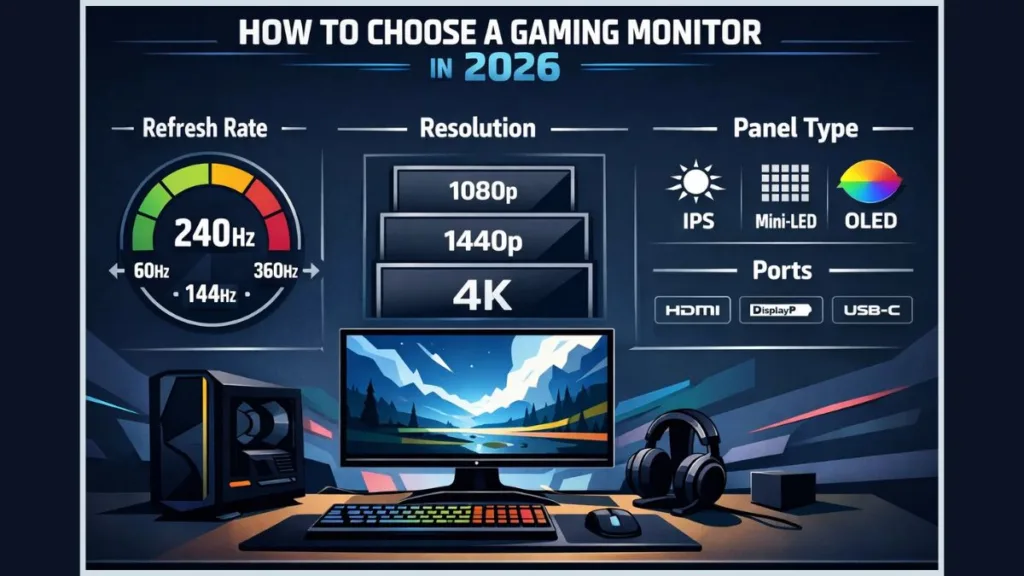

How To Choose A Gaming Monitor In 2026 Complete Gaming Monitor Buying Gaming Monitor Guide 2026. AOC Monitors Buying Guide 2026 How To Choose The Right Screen For Work AOC Monitors Buying Guide 2026 Main . Xiaomi G34WQi 2026 Curved Gaming Monitor Gets Global Launch G34WQi 2026 . Xiaomi Launches G24i 2026 And G27i 2026 Gaming Monitors In The Xiaomi Launches G24i 2026 And G27i 2026 Gaming Monitors In The Philippines . Samsung Launches World S First 6K 1040Hz Gaming Monitors 2026 Sammy Odyssey 2026 Gaming Monitors


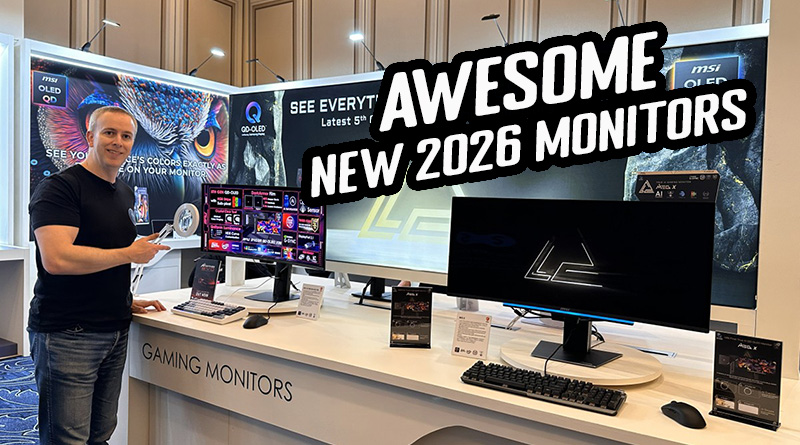
CES 2026 ASUS ROG Announces Next Gen RGB OLED Tech PC Perspective 2 Rog Rgb Oled Monitor Ces26 One Pager 2048x1152 . Xiaomi G24i 2026 G27i 2026 Gaming Monitors Launched Globally Xiaomi Xiaomi Gaming Monitor G24i 2026 G27i 2026 Q2XM0.webp. Round Up All The Latest Awesome 2026 Monitors From MSI At CES 2026 Msi Ces 2026 Website Featured . Asus Launches New ROG Wi Fi 7 Gaming Router That Comes With Nine 2 5G . BEST Gaming Monitor In 2026 Here S What You SHOULD Buy At Every


Best Gaming Monitor 2026 Top Picks For 1080p 1440p And 4K Best Gaming Monitor 2026 . Best Gaming Monitors For 2026 Reviews And Bharat Erberbr . Best Monitors For RTX 5090 In 2026 Our Top Picks PC Guide Best Pulsar Gaming Monitors . Xiaomi Gaming Monitor G24i 2026 27 10 2025 Xiaomi Gaming Monitor G24i 2026 3.webp. BEST 1440P GAMING MONITORS IN 2025 2026 PC Explorers Best 1440p Gaming Monitors For Gaming In 2025 2026 1024x576

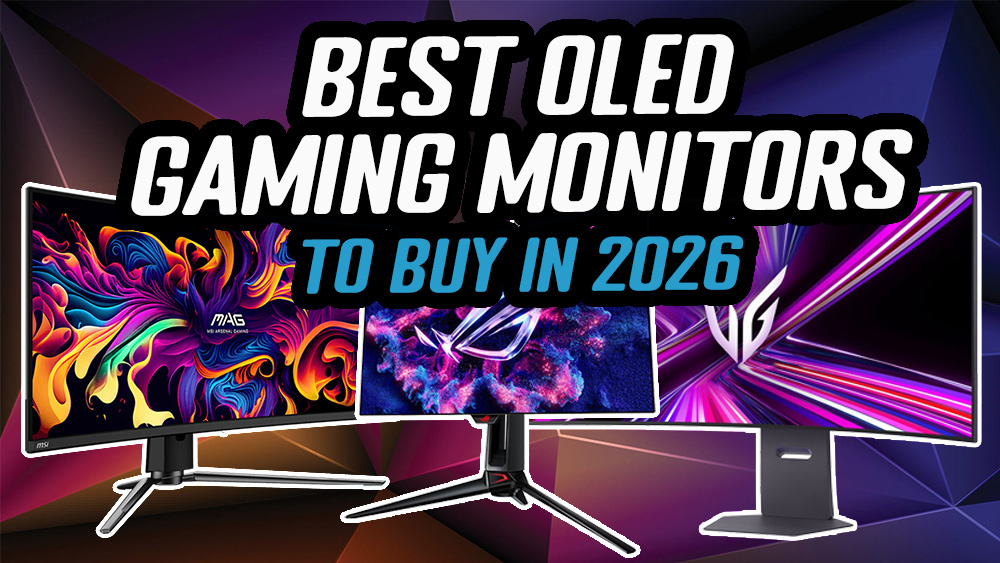
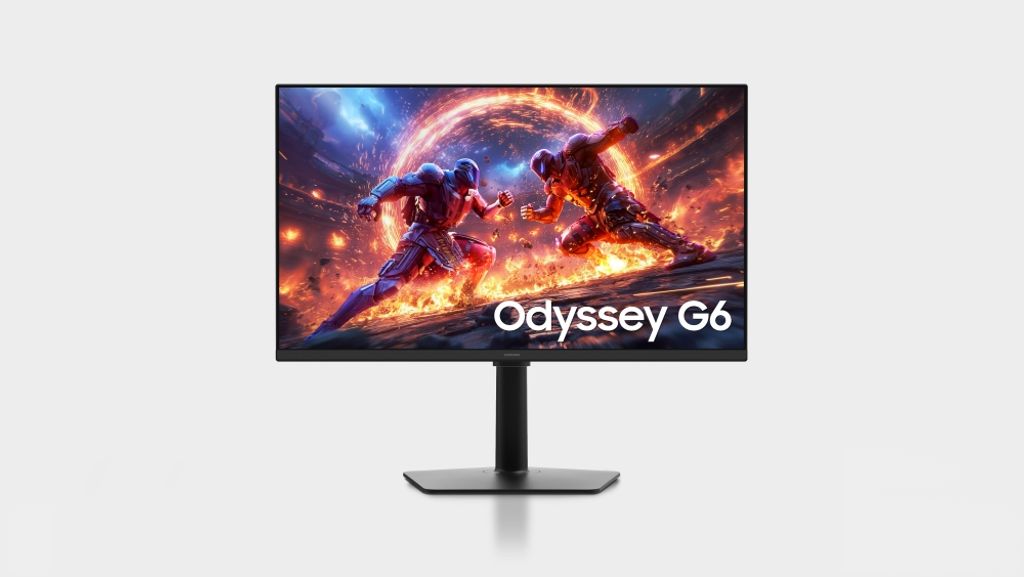
Xiaomi Reveals Global Launches Planned For New G24i 2026 And G27i 2026 Xiaomi 24 And 27 Inch 2026 Launches Kv . Best OLED Gaming Monitors To Buy In 2026 AOC Monitors Buying Guide 2025 For Gaming And Office . Samsung Odyssey 2026 Gaming Monitors Announced With 6K 3D 1 040Hz G6 MSI MPG 322UR QD OLED X24 And MAG 321UP QD OLED X24 Monitors . The Best OLED Gaming Monitors To Buy In 2026 TFTCentral Best Oled Gaming Monitors Thumbnail 2026 . Samsung Odyssey 2026 The New Generation Of Gaming Monitors With 6K 3D Samsung T Vs And Displays Odyssey Gaming Monitor Featuring World First 6k 3d And Ultra High Resolution Displays Main3


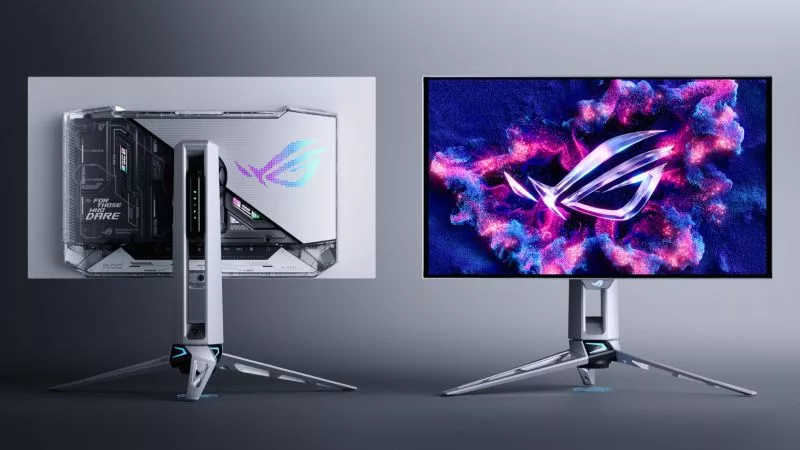

Best Gaming Monitors For 2026 Top Picks For PS5 Esports More Best Gaming Monitor 768x512 . Gaming Monitor Guide 2026 Everything You Need To Know London Daily News Gaming Monitor Guide 2026 Everything You Need To Know11. How To Choose A Gaming Headset In 2026 Competitive FPS Immersion And. 2026 4K Gaming Monitors GPU Balance And Best Settings 2 3 1 . How Much Is A Normal Gaming PC What Is The Cost



Best OLED Monitor 2026 How To Fix Vizio TV Black Screen 1 . Best 240Hz Monitor 2026 Buying Guide Display Ninja Best 240Hz Gaming Monitors 1024x576 . Guide How To Choose Gaming Monitors In 2026 Or When Pixels Are Metter. KTC H27T22S Review 2026 Best Budget Gaming Monitor Best HDR Monitors 1024x576 . How To Choose A Gaming Monitor In 2026 Resolution Refresh Rate How To Choose Gaming Monitor 2026
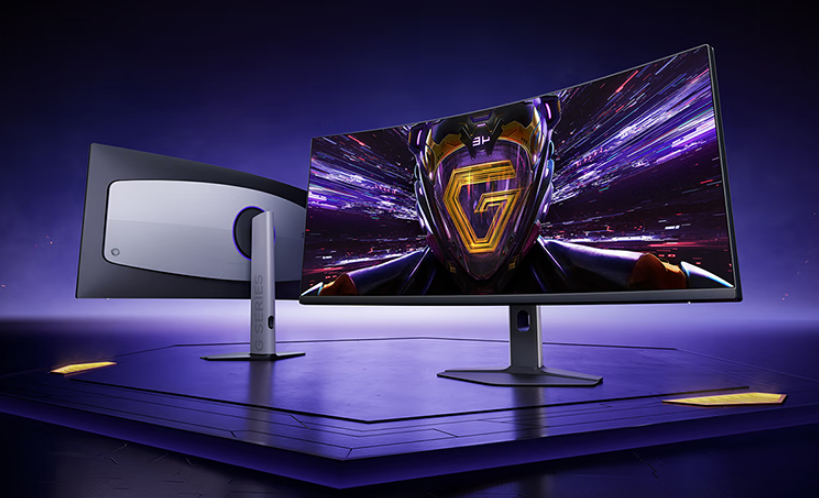


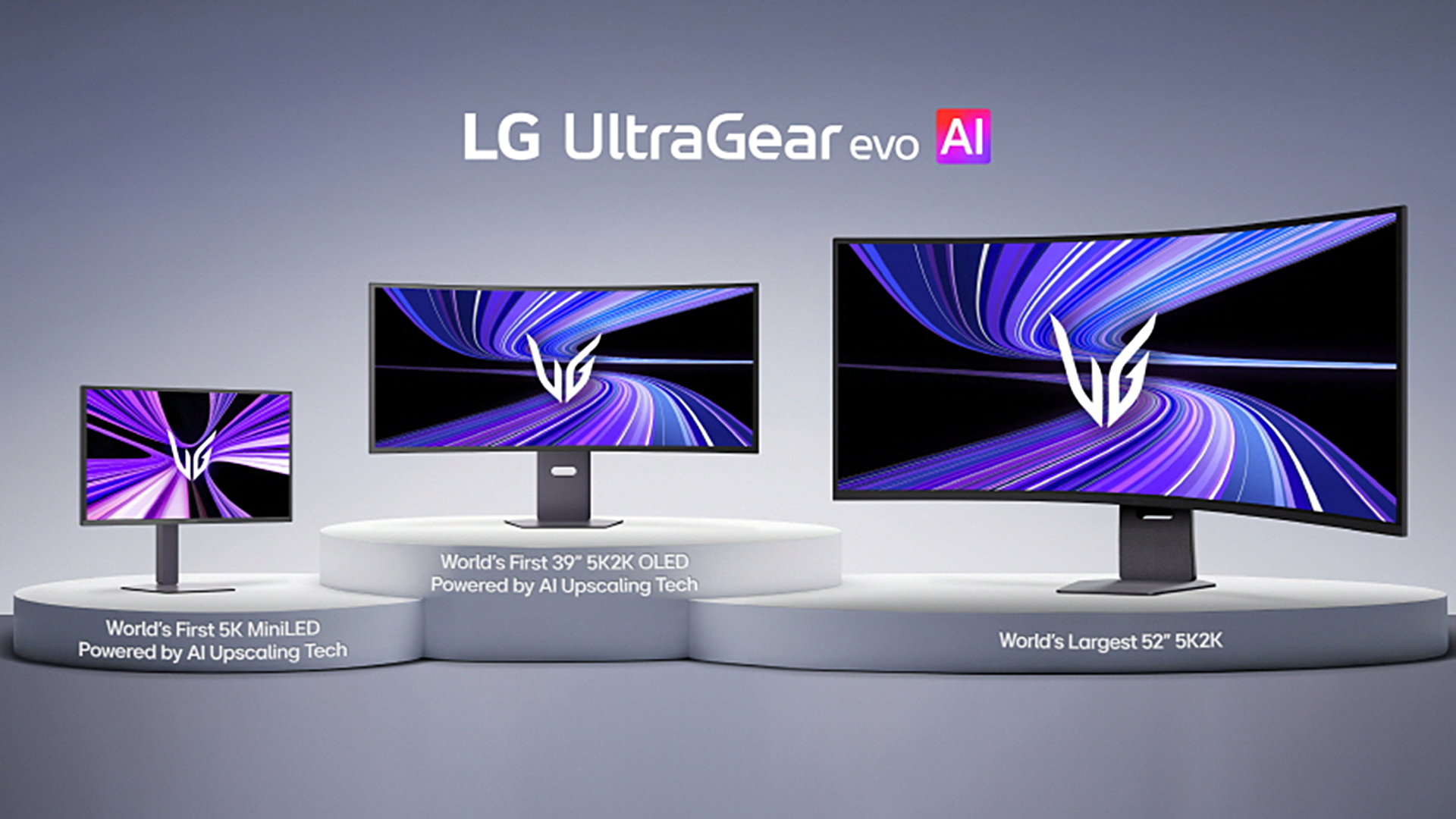
How To Choose The Right Gaming PC In 2026 Complete Guide Complete Guide . Redmi Gaming Monitor G34WQ 2026 Launched With 34 Inch 180Hz WQHD Curved Redmi Gaming Monitor G34WQ 2026 . Ultimate Gaming Monitor Buyer S Guide 2026 How To Choose A Gaming Monitor Buyers Guide.webp. Best Gaming Monitors 2026 Swift OLED PG27AQDM 2 Of 26 . Samsung 2026 Odyssey Gaming Monitor Lineup Best Of High End Samsung 2026 Odyssey Gaming Monitor Lineup 4