The map butterfly, known scientifically as Araschnia levana, presents a fascinating study in seasonal adaptation and natural beauty. This exquisite insect captivates observers with its unique ability to display distinct appearances between its spring and summer generations. While primarily native to Europe and Asia, its intriguing life cycle and striking wing patterns generate significant curiosity among nature enthusiasts and researchers in the United States. Exploring the map butterfly involves understanding its habitat preferences, larval food sources like nettles, and the environmental cues that trigger its remarkable dimorphism. This article provides comprehensive insights into this lesser-known but truly captivating species, highlighting why it remains a subject of great interest globally. Discover the intricate details behind its name and its ecological role.
What makes the Map Butterfly unique?
The map butterfly is unique due to its seasonal dimorphism, displaying two distinct appearances for its spring and summer generations. The spring form is predominantly orange and black, while the summer form is mostly black with white markings. This adaptation helps it blend into varying seasonal environments, making it a fascinating example of natural evolutionary strategies.Where do Map Butterflies live?
Map butterflies are native to large parts of Europe and temperate Asia. They thrive in various habitats, including woodland clearings, damp meadows, and forest edges, especially where their host plant, stinging nettles, is abundant. They are not naturally found in the United States.What is the life cycle of the Map Butterfly?
The map butterfly undergoes complete metamorphosis: starting as eggs laid on nettle leaves, developing into caterpillars that feed on the leaves, then forming a chrysalis, and finally emerging as an adult butterfly. This entire cycle usually repeats twice or thrice within a year, producing different seasonal forms.Do Map Butterflies pose any threat to ecosystems?
No, map butterflies do not pose a threat to ecosystems in their native habitats. They are a natural part of the food web and their caterpillars primarily feed on stinging nettles, which are common plants. As native insects, they contribute to biodiversity and play a role in pollination.How can I attract Map Butterflies to my garden?
To attract map butterflies, if you are in their native range, plant stinging nettles (Urtica dioica) in a suitable, controlled area. Nettles are the essential food source for their caterpillars. Providing nectar-rich flowering plants for the adults can also encourage them to visit your garden. Remember they are not native to the USA.What do Map Butterflies look like?
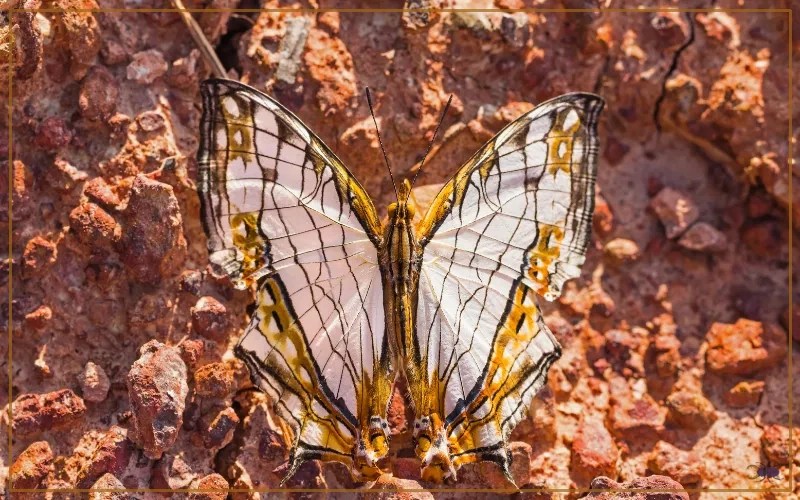
Map butterflies exhibit striking seasonal variation. The spring generation has bright orange and black wings, often with white spots, resembling a classical butterfly pattern. The summer generation is predominantly black with bold white markings, especially on the forewings. Both forms have intricate, map-like patterns on their wing undersides.Are Map Butterflies endangered?
Generally, map butterflies are not considered endangered across their wide native range in Europe and Asia. However, like many insect species, local populations can face threats from habitat loss, pesticide use, and climate change. Conservation efforts focusing on preserving their habitats and host plants are important for their continued prevalence.The map butterfly, or Araschnia levana, is a truly remarkable insect found across Europe and Asia. It is famous for its incredible seasonal transformations, appearing quite different in spring compared to summer. This phenomenon, known as seasonal dimorphism, makes the map butterfly a captivating subject for nature enthusiasts and scientists alike. Understanding this unique creature helps us appreciate biodiversity.
You might be wondering, what exactly is the map butterfly? It is a medium-sized butterfly whose wings are distinctly patterned. The spring generation typically exhibits an orange and black design, while the summer generation displays a predominantly black pattern with white markings. These striking differences are directly influenced by environmental factors such as temperature and day length during their development. It is an amazing example of nature's adaptability.
The Map Butterfly's Seasonal Secrets
Unraveling the map butterfly's secrets reveals a fascinating story of survival. The spring form, called levana, usually has a brighter, more orange coloration. This helps it blend with emerging spring foliage. The summer form, known as prorsa, is darker and mimics the shadows of denser summer vegetation. Both forms feature intricate patterns on their undersides, resembling old maps, which gives the butterfly its common name.
Understanding where the map butterfly lives is key to its story. These butterflies thrive in diverse habitats, including woodlands, meadows, and along riverbanks. They are often found near their primary host plant, the stinging nettle (Urtica dioica). This plant is vital for their survival, as it provides both food and shelter for their caterpillars. Observing these insects in their natural settings truly highlights their resilience and beauty.
Life Cycle of the Map Butterfly
The map butterfly undergoes a complete metamorphosis, a process common to all butterflies. It begins as tiny eggs laid on nettle leaves by the female butterfly. These eggs hatch into small, spiky caterpillars that feed voraciously on the nettles. After several molts, the caterpillar forms a chrysalis. It is within this chrysalis that the amazing transformation into an adult butterfly takes place. This cycle repeats twice a year.
| Species Name | Araschnia levana |
| Common Name | Map Butterfly |
| Primary Habitat | Europe, Asia (woodlands, meadows) |
| Host Plant | Stinging Nettle (Urtica dioica) |
| Distinct Feature | Seasonal Dimorphism |
| Generations Per Year | Typically two or three |
What Others Are Asking About the Map Butterfly?
What is the Map Butterfly known for?
The map butterfly, Araschnia levana, is renowned for its striking seasonal dimorphism. Its spring generation typically displays orange and black wings, while its summer generation has a dark black and white pattern. This remarkable adaptation allows the butterfly to camouflage itself effectively across changing seasons, making it a unique spectacle in the insect world. It's a true marvel of natural selection.
Where can I find the Map Butterfly?
You can primarily find the map butterfly in woodland clearings, damp meadows, and along the edges of forests throughout Europe and temperate Asia. These butterflies are often seen fluttering near patches of stinging nettles, which serve as the essential host plant for their caterpillars. They prefer areas with good sun exposure and abundant larval food sources. They are not native to the USA.
What do Map Butterfly caterpillars eat?
Map butterfly caterpillars exclusively feed on the leaves of stinging nettles (Urtica dioica). This specific diet is crucial for their development and growth into adult butterflies. The nettles provide the necessary nutrients and also offer a degree of protection due to their stinging hairs. Without stinging nettles, the map butterfly cannot complete its life cycle.
How long does the Map Butterfly live?
The adult map butterfly typically lives for a short period, usually around two to three weeks. Their primary purpose as adults is to mate and lay eggs, ensuring the next generation. The entire life cycle, from egg to adult, varies depending on environmental conditions like temperature and food availability, but the adult stage is brief yet vital. Their brief lifespan is packed with purpose.
Is the Map Butterfly rare?
The map butterfly is generally not considered rare across its native range in Europe and Asia. In many regions, it is quite common, especially in suitable habitats with ample stinging nettle populations. However, local populations can fluctuate due to habitat loss or changes in environmental conditions. Monitoring local populations is important for conservation efforts. Its presence indicates healthy ecosystems.
Are Map Butterflies found in the USA?
No, map butterflies are not native to the United States. Their natural range is restricted to parts of Europe and Asia. Any sightings in the USA would likely be accidental introductions or captive specimens. It is essential for conservation that non-native species are not released into new environments, protecting local ecosystems from potential disruption. They are an Old World species.
FAQ About the Map Butterfly
Who is the Map Butterfly?
The map butterfly is a fascinating insect species, Araschnia levana. It is a medium-sized butterfly famous for its distinct seasonal forms. This makes it a popular subject for nature observation. It brings a touch of unique beauty to its natural habitats.
What is special about the Map Butterfly?
Its seasonal dimorphism is truly special. The spring generation looks orange and black, while the summer generation is dark with white patterns. This adaptation helps it blend into different seasonal landscapes. It showcases nature's clever designs.
Why is it called the Map Butterfly?
It gets its name from the intricate, vein-like patterns on the underside of its wings. These patterns resemble the lines and contours of an old map. This descriptive name perfectly captures its detailed and unique appearance. It truly looks like a tiny living map.
How does the Map Butterfly adapt to seasons?
The map butterfly adapts through temperature and day length during its larval and pupal stages. These environmental cues trigger different genetic expressions, resulting in distinct wing patterns for spring and summer generations. This is a brilliant evolutionary strategy for survival. Its survival strategy is quite remarkable.
Profile of a Map Butterfly Expert/Documentary Narrator
For a compelling documentary or educational content about the amazing map butterfly, a narrator or expert would ideally possess specific qualities. Such an individual would embody a passion for entomology and conservation, drawing viewers into the intricate world of these insects. Their presence would lend authority and relatability to the fascinating story.
Height: 5'8" to 6'2"
Build: Average to slender, agile for field work
Hair: Any natural color, well-maintained
Eyes: Expressive, conveying curiosity and knowledge
Age Range: 35-55, projecting seasoned experience
Ethnicity: Open, focusing on communication skills
Seasonal dimorphism, Araschnia levana, European and Asian native, Nettle feeder, Unique wing patterns, Life cycle stages, Ecological fascination, Adaptation marvel


Butterflies 2026 Wall Calendar Calendars Com . Nature Calendar Year 2026 With Butterflies And Flowers Stock Image Nature Calendar Year Butterflies Flowers Vibrant Image Displays Year Formed Lush Green Grass Small White 376601025 . Monarch Butterfly Habitat Map Monarch Monitoring Project New Jersey NWF 2024 . Butterflies 2026 Calendar Paper Pocket Calendars Diaries And Gifts 2026 Butterflies 01 8b41e2d9 F604 47ef 96a5 1200x1200 . Monarch Butterfly 2026 Weekly Planner Indigenous Collection PLN170


Butterflies 2026 Weekly Monthly 5x8 Planning Calendar Robert Stell 157526 AMZ Slanted . AGENDA 2026 BUTTERFLY ESCRITORIO SEMANAL 312624 800 1133. 2025 2026 Butterflies 2 Year Pocket Planner Soft Calender Nature S L1600 . Butterflies 2026 Wall Calendar Calendars Com ALT1 . 2026 Butterflies Square Wall Calendar 1 40c6b753 0392 4d7e B858




Bybiment 2026 Calendar Butterflies Monthly Wall Calendar 2026 Runs Bybiment 2026 Calendar Butterflies Monthly Wall Calendar 2026 Runs From Nov 2025 To Dec 2026 Hanging Wall Calendar 11 6 24 Full Page Layout 86cdbae0 2f8c 49dd 9236 . Butterfly Themed 2026 Printable Calendar EntheosWeb Butterfly Themed 2026 Printable Calendar July . Butterfly Themed 2026 Printable Calendar EntheosWeb Butterfly Themed 2026 Printable Calendar Pimg 1 . 2026 Butterfly Font Text Effect Generator 2026 . 2026 Butterflies Square Wall Calendar 6 Abe26141 8a83 45f1 9d06



Butterfly Themed 2026 Printable Calendar EntheosWeb Butterfly Themed 2026 Printable Calendar June . Butterflies 2026 Wall Calendar By Jane Shasky Calendars Com 600f9bbe 2614 4b2f Af3e. Free Printable 2026 Calendars EntheosWeb Butterfly Themed 2026 Printable Calendar Fimg 3 . Butterfly Themed 2026 Printable Calendar EntheosWeb Butterfly Themed 2026 Printable Calendar May . Butterfly Themed 2026 Printable Calendar EntheosWeb Butterfly Themed 2026 Printable Calendar March 1024x791


Butterfly Themed 2026 Printable Calendar EntheosWeb Butterfly Themed 2026 Printable Calendar April . Butterfly Themed 2026 Printable Calendar EntheosWeb Butterfly Themed 2026 Printable Calendar August . Printable Calendars 2026 EntheosWeb Printable Calendar 2026 By Entheosweb Butterflies . January 2026 Printable Calendars EntheosWeb Butterfly Themed 2026 Printable Calendar January . 2026 Butterflies Square Wall Calendar 4 849175a8 2305 4d21 8848


Butterfly Themed 2026 Printable Calendar EntheosWeb Butterfly Themed 2026 Printable Calendar November . Butterflies Photo 2026 Wall Calendar Calendars Com 22dd4fd1 A118 4fff B3c8. Butterfly Themed 2026 Printable Calendar EntheosWeb Butterfly Themed 2026 Printable Calendar December 1024x791 . Butterfly Themed 2026 Printable Calendar EntheosWeb Butterfly Themed 2026 Printable Calendar February . 30 Butterfly Species In Oregon Insectic Common Map Butterfly Cyrestis


Groovy Retro Butterfly 2026 Year Calendar In Flat Colorful Style Groovy Retro Butterfly 2026 Year Calendar In Flat Colorful Style Month Layout With Cute Graphics For Wall Or Desk Banner Y2k Pattern For A Playful Year Modern And Funky Look In Every Month Vector . January 2026 Calendar Printable With Holidays Stickers Cute Il Tuqn . Collaged Butterfly On Map The Arty Teacher Collage Butterfly Included . Butterfly Themed 2026 Printable Calendar EntheosWeb Butterfly Themed 2026 Printable Calendar October 2 . 2026 Butterflies Square Wall Calendar 3 9691d2c1 54af 4332 84ab